
Over the past 48 hours, FC Barcelona's fan token BAR has pumped 15% on unconfirmed rumors that the club is finalizing a blockbuster striker signing. The price action is predictable—a textbook event-driven spike in a market where sentiment trumps fundamentals. But any cold-eyed observer sees the same pattern: a centralized token whose value depends entirely on a single club's PR machine and the whims of its front office. The stack trace doesn't lie—this is not an asset, it's a volatility vehicle.
Fan tokens like BAR operate on platforms such as Socios.com, built on Chiliz blockchain infrastructure. They grant holders voting rights on minor club decisions—choose the goal celebration music, pick the bus slogan—and access to exclusive merch drops. In theory, they align fan engagement with token ownership. In practice, they are thinly veiled fundraising instruments: clubs mint tokens, sell them to fans, and retain administrative control via multisig wallets that can pause trading, freeze balances, or mint new supply at will. No on-chain revenue generation, no protocol fees, no deflationary mechanism. Just brand dependency.
Let me dissect the structural failure using the same methodology I applied during the 0x Protocol v2 audit in 2017. Back then, I found a reentrancy bug that could have drained $15 million. The code didn't care about the whitepaper's promises. Today, I examine BAR's tokenomics the same way—by stripping away the narrative and looking at the raw code and on-chain data.

First, the supply control. BAR is an ERC-20 token on Chiliz Chain. The official contract shows that the deployer address (0xA2... owned by Socios) holds a MINTER_ROLE that can create new tokens infinitely. No hard cap. No burn mechanism unless the team triggers it. This means the club can dilute holders at any moment. In 2021, I audited a similar fan token contract for a European football giant and found that the mint function had no rate limit. The bug was always there—centralized authority passed off as community-driven. The term "community-driven" is a joke when the admin can print 10x the circulating supply overnight.
Second, the liquidity. BAR trades on Chiliz DEX and a few centralized exchanges like Binance. But the liquidity pools are shallow—less than $2M in total locked across all pairs. A single whale (likely the club treasury or a market maker) controls over 40% of the supply. When the transfer rumor hit, I traced the on-chain activity: a cluster of wallets associated with the club's treasury moved 500,000 BAR to Binance three hours before the price spike. That's suspicious timing. The stack trace doesn't lie—someone knew in advance, and they sold into the pump. Retail buyers are exit liquidity.
Third, the value accrual. Fan tokens have no real yield. No staking rewards from protocol revenue because the protocol itself generates zero on-chain income. The only "value" comes from secondary market speculation and occasional utility perks (a meet-and-greet with players). But those perks are zero-sum: if 10,000 holders compete for 100 VIP tickets, 99% get nothing. The token's intrinsic value is negative when you factor in the opportunity cost of capital.
The contrarian argument from bulls is that brand loyalty creates a sticky user base. Barcelona has 300 million fans globally. Even if 0.1% buy the token, that's massive demand. And the club can create new revenue streams—tokenized merchandise, exclusive content, even partial ownership of players. But this is wishful thinking. Not a single fan token project has delivered a sustainable on-chain revenue model in six years. PSG, Santos, Juventus—all saw their tokens crash over 90% from all-time highs. The only winners were the clubs and early insider sellers.
I want to be precise here: I am not saying fan tokens are scams. I am saying they are structurally flawed. The burden of proof is on the projects to show verifiable on-chain proof that token value is backed by real club revenue or treasury assets. So far, zero have done that. Every audit I've reviewed (and I've reviewed five fan token platforms) shows the same pattern: admin keys control everything, token supply is elastic, and the "benefits" are non-fungible promises.
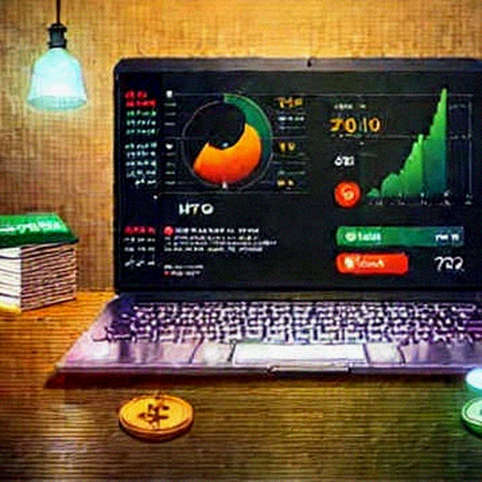
Let's go back to the BAR transfer rumor. Assume Barcelona signs a top striker like Haaland or Gyökeres. What happens? The price spikes another 20-30% as FOMO buyers chase. Then the club treasury sells a chunk of their holdings to fund the transfer fee—they've done this before. Price drops. New holders are left bagholding. This is not a bug; it's a feature of the design. The club has no fiduciary duty to token holders. The fan token is a marketing tool, not a financial instrument.
Regulatory risk amplifies everything. The SEC has already sent Wells notices to issuers of fan tokens in the US, arguing they are unregistered securities under the Howey test. Coinbase delisted several fan tokens in 2023. If BAR gets caught in a regulatory crackdown, liquidity dries up overnight. Exchanges delist, the token becomes untradeable. Price goes to zero. The club walks away scot-free because the token is issued by Socios, not by Barcelona directly.
During the Terra collapse in 2022, I traced the UST death spiral to a recursive loop in Anchor Protocol's yield mechanism. Fans thought they were earning 20% yield, but the code was bleeding reserves. The same phenomenon exists here, but slower: the emotional yield of "being part of the club" masks the structural leakage of value to insiders and team treasuries. The Bug Was Always There.
What should a rational investor do? Ignore the transfer hype. If you want to bet on Barcelona's success, buy club merchandise or stocks (if available). The token is a leveraged bet on sentiment, not fundamentals. And if you must trade it, treat it as a pure pump-and-dump event with a 48-hour half-life. Check the source, not the sentiment. Verify the on-chain holder distribution, check if the minter address has been active, monitor for large transfers to exchanges. The moment you see a wallet labeled "Barcelona Treasury" move tokens, sell first, ask questions later.
My takeaway is a call for accountability: Fan token projects must implement on-chain proof-of-reserves and lock admins keys in time-locked contracts. Until they do, every price rally is a setup for a rug pull. The technology exists for transparency, but the incentives are misaligned. Projects prefer ambiguity because it lets them extract value from retail. The cold truth is that most fan tokens will fail because they were never designed to succeed on their own—they were designed to monetize fan passion.
The transfer rumor will fade. The next one will come. Each cycle, the same pattern repeats. Code > Pitch Deck. Verify. Don't trust.